Reviewing Palm Trees and a Sun for Real Projects
As an embroidery designer who has spent years digitizing patterns and testing them on everything from flimsy rayon to heavy denim, I approach every new machine embroidery design with a critical eye. It is not enough for a motif to look cute on a screen; it must hold up under the needle, survive the wash cycle, and appeal to the end customer. Recently, I evaluated Palm Trees and a Sun, a charming piece from the Single Flowers Plants category, to see if it truly delivers on its promise of adding subtle charm to fabric projects.
First Impressions and Visual Personality
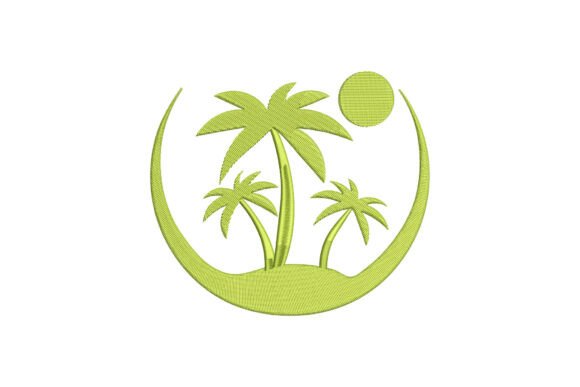
The immediate appeal of Palm Trees and a Sun lies in its simplicity. In a market saturated with overly complex, dense designs that require hours of stitching time, this pattern offers a breath of fresh air. The layout features iconic tropical silhouettes that evoke a sense of calm, vacation vibes, and warmth. For a designer, this visual personality is versatile. It does not scream for attention with excessive detail; instead, it suggests a mood. This makes it an excellent candidate for minimalist aesthetics, which are currently trending in boutique branding and modern home décor.
The shape and theme are instantly recognizable, which is crucial for commercial viability. When a customer sees a palm tree, they immediately associate it with summer, relaxation, or coastal living. This instant recognition reduces the cognitive load for buyers browsing an Etsy shop or a craft fair table. They do not need to decipher abstract shapes; they know exactly what they are getting. The design’s clean lines suggest that it relies heavily on well-placed satin stitch borders and potentially open fill stitch areas, though the exact density depends on the specific digitization file provided.
Real-World Application: The Tote Bag Test
To truly understand how Palm Trees and a Sun performs, I mentally placed it into a common real-life scenario: creating a custom embroidered tote bag for a local beachside boutique. Tote bags are often made from canvas or cotton twill, fabrics that have a distinct weave and texture. A design with too much fine detail can get lost in the fabric grain, but a bold, simple silhouette like this one stands out beautifully.
Imagine stitching this onto a natural-colored canvas bag. The contrast between the dark green or teal thread of the palms and the neutral background creates a sophisticated, earthy look. If used as a tote bag design, it appeals to eco-conscious shoppers who appreciate handmade quality. The simplicity of the sun element ensures that the focal point remains balanced. It does not overpower the bag’s utility but enhances its aesthetic value. This kind of application transforms a generic item into a handmade product with perceived higher value.
Apparel and Custom Gifts
Beyond home goods, this design shines in custom apparel. Consider a lightweight linen shirt or a classic white t-shirt. Here, the stitch density becomes a critical factor. If the design is too dense, it can cause puckering on thin fabrics. However, given its description as having a "subtle touch of charm," I anticipate it is digitized with moderate density, making it suitable for sweatshirt embroidery as well. On a fleece or jersey knit, the design needs proper stabilization to prevent distortion. The broad shapes of the palm fronds allow for smooth stitching without excessive jump stitches, which reduces production time—a key consideration for any craft business owner scaling up production.
For baby embroidery, such as on a muslin swaddle or a nursery pillow cover, the soft, organic lines of the palms are comforting and gender-neutral. Parents often look for designs that are whimsical yet timeless. Palm Trees and a Sun fits this niche perfectly, serving as a gentle decorative accent rather than a loud graphic. It also works well for holiday embroidery projects, particularly for summer-themed gifts or vacation souvenirs.
Technical Considerations and Fabric Compatibility
While the design is versatile, it is not without its limitations. Experienced embroiderers know that placement and fabric choice can make or break a project. When working with textured fabrics like terry cloth towels, the finer details of the palm fronds might merge if the stitch length is too short. In such cases, increasing the stitch length slightly or using a thicker thread weight can help maintain clarity.
Curved surfaces present another challenge. If you plan to use this on a cap or hat, the curvature of the crown can distort the image. The sun element, being circular, might appear oval if not centered perfectly or if the hoop tension is uneven. Therefore, testing on scrap fabric is non-negotiable. Always check how the design sits on the specific garment type before committing to the final finished product.
Dark fabrics require careful planning regarding thread colors. A dark green palm on a navy blue shirt may lack sufficient contrast. In these instances, opting for brighter greens, yellows, or even metallic threads for the sun can enhance visibility. Additionally, using a stabilizer that matches the fabric weight is essential. For stretchy knits, a cut-away stabilizer provides the necessary support to keep the running stitch outlines crisp and prevent the fabric from pulling away from the stitches over time.
Commercial Viability for Etsy Sellers and Makers
For Etsy sellers and small shop owners, the profitability of a design often hinges on stitch time and versatility. Palm Trees and a Sun appears to be optimized for efficiency. Lower stitch counts mean faster production, allowing makers to produce more units in less time. This efficiency is vital for maintaining healthy margins in a competitive market. Furthermore, the design’s adaptability allows it to be marketed across multiple categories: summer wear, beach accessories, nursery decor, and travel gear.
When creating printable mockup assets for online listings, this design photographs well. Its clear silhouette translates effectively into digital images, helping potential customers visualize the final result. Whether used as an embroidered patch or directly stitched onto fabric, the design maintains its integrity. It supports brand consistency for shops focusing on tropical, bohemian, or coastal themes.
Final Designer Notes and Best Practices
Before integrating Palm Trees and a Sun into your workflow, there are several practical steps to ensure success. First, verify the available hoop size options. Ensure the design fits comfortably within your machine’s maximum area without requiring excessive re-hooping, which can lead to alignment issues. Second, review the license terms. While many designs allow for commercial use of finished physical items, restrictions may apply to selling the digital embroidery file itself or using it in certain mass-production contexts. Always confirm licensing before selling.
- Test on Scrap Fabric: Always run a test stitch-out on the same material you intend to use for the final product to check for puckering or thread breaks.
- Check Contrast: Use black and white mockups to ensure the design elements are distinct and not blending together.
- Stabilizer Selection: Match your stabilizer to the fabric type—cut-away for knits, tear-away for wovens—to ensure longevity.
- Thread Quality: High-quality rayon or polyester threads will enhance the sheen of the satin stitches, elevating the overall look of the embroidery project.
In conclusion, Palm Trees and a Sun is a solid addition to any designer’s library. It balances aesthetic appeal with practical stitchability, making it a reliable choice for both hobbyists and professional commercial embroidery operations. By understanding its strengths and respecting its technical requirements, you can create beautiful, high-quality items that resonate with customers and stand the test of time.