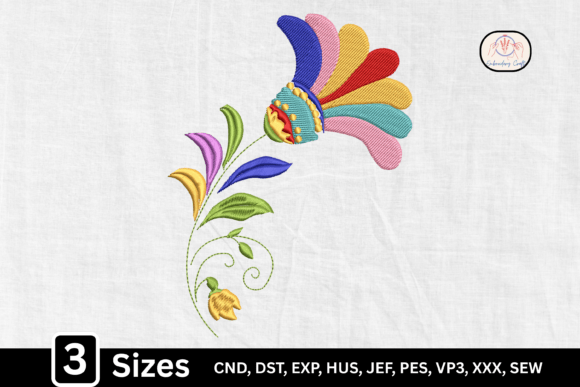
Scandinavian Floral Folk: A Designer’s Review
As an embroidery designer who has spent years digitizing patterns for small businesses and boutique brands, I approach every new machine embroidery design with a critical eye. It is not just about aesthetics; it is about functionality, brand alignment, and production viability. Recently, I reviewed Scandinavian Floral Folk, a vibrant addition to the Single Flowers Plants category. This piece promises to add a playful and artistic touch to projects, but does it hold up under the scrutiny of commercial application? Here is my professional assessment of how this design performs in real-world business scenarios.
First Impressions: Visual Personality and Style
The moment I loaded the preview for Scandinavian Floral Folk, the immediate impression was one of cheerful sophistication. The description highlights a "colorful folk flower" aesthetic, and the visual delivery matches this promise. It strikes a delicate balance between rustic charm and modern elegance. For a brand owner, this distinction is crucial. You do not want a design that looks dated or overly childish unless that is your specific niche. This design feels premium yet accessible, making it versatile for a wide range of industries.
The botanical elements are stylized rather than hyper-realistic, which is a significant advantage in embroidery. Highly realistic flowers often require excessive stitch counts and complex shading that can look muddy on textured fabrics. In contrast, the folk-art style of this embroidery file uses bold shapes and distinct color blocks. This ensures clarity and impact, even when viewed from a distance. It feels handmade and authentic, qualities that today’s consumers actively seek out in branded merchandise.
Strategic Applications for Small Business Merch
For small business owners, Etsy sellers, and merch creators, the utility of a design is paramount. Scandinavian Floral Folk is not just a decorative element; it is a branding asset. Here is how I envision this design performing across various product lines:
- Embroidered Patches: This is perhaps the strongest use case. The bold outlines and vibrant thread colors make it ideal for iron-on or sew-on patches. Patches are low-risk inventory for startups, allowing them to test branding on hats, bags, and jackets without committing to full garment embroidery.
- Apron Embroidery: For bakeries, florists, and coffee shops, staff uniforms are walking billboards. Placing this floral motif on the chest pocket or lower corner of a canvas apron adds a touch of warmth and professionalism. It softens the industrial look of workwear while maintaining a clean, organized appearance.
- Tote Bag Design: Canvas tote bags are staples for boutique retail. The Scandinavian style pairs beautifully with natural fibers. A centered placement of this floral design can transform a generic bag into a desirable accessory, increasing the perceived value of the handmade product.
- Cap Embroidery: While possible, cap application requires caution. The curved surface of a baseball cap can distort intricate details. However, if the design is scaled correctly, it can serve as a charming side-panel accent or a subtle front logo for lifestyle brands.
Brand Identity and Customer Trust
Consistency in visual language builds trust. When a customer sees the same high-quality Scandinavian Floral Folk motif on your packaging, your website, and your physical products, it reinforces brand recognition. This design contributes to a cohesive brand identity that signals attention to detail. In the world of commercial embroidery, sloppy stitching or poorly chosen designs can detract from perceived quality. Conversely, a well-executed folk floral design suggests that the business cares about craftsmanship.
Furthermore, this design appeals to the current market trend favoring artisanal and local goods. By incorporating such a distinct aesthetic into your small business merch, you align your brand with values of creativity and authenticity. This emotional connection can drive buyer engagement and loyalty, turning one-time customers into repeat buyers who appreciate the artistic effort behind the finished product.
Technical Considerations and Production Notes
While the design is visually appealing, successful execution depends on technical precision. As a designer, I always advise testing before full production. Here are critical factors to consider when working with this digital embroidery file:
- Stitch Density and Fabric Texture: Folk designs often rely on satin stitches for outlines. On loose-weave fabrics like linen or canvas, high stitch density can cause puckering. Always use an appropriate stabilizer—cut-away for stretchy fabrics and tear-away for stable woven materials. Test on a scrap piece of your actual production fabric to check for pull or distortion.
- Color Contrast and Thread Selection: The vibrancy of this design relies on contrast. If you are embroidering on dark uniforms, ensure you use a bright underlay or adjust the thread colors to maintain visibility. Do not assume the default color map in the file will work for every background. Create a printable mockup to visualize how the thread colors interact with your garment hues.
- Size and Legibility: Before committing to a large run, stitch out the design at its smallest intended size. Detailed outlines can merge if the design is too small, losing the definition that makes the folk style charming. Confirm the recommended hoop size and ensure your machine can handle the dimensions without re-hooping, which can lead to misalignment.
- Wash Durability: For items like aprons and work shirts that undergo frequent washing, secure all thread ends properly. Consider using polyester threads for better color retention and durability compared to rayon, especially for commercial items that will see heavy use.
Where to Use Caution
Not every application is suitable for every design. Scandinavian Floral Folk may struggle on highly textured surfaces like thick terry cloth towels, where fine details can get lost. Additionally, avoid placing it over seams or zippers, as the needle deflection can ruin the symmetry of the floral pattern. If you are using it for tiny lettering accompaniments, ensure the font weight matches the boldness of the flower; delicate scripts may disappear next to the robust folk elements.
Final Verdict for Designers and Makers
In conclusion, Scandinavian Floral Folk is a strong contender for any designer looking to expand their library of versatile, commercially viable assets. It bridges the gap between traditional craft and modern branding needs. For custom apparel decorators and boutique owners, it offers a ready-made solution for adding personality to products without the cost of custom digitizing.
However, remember that the file is only as good as its execution. Always verify the specific file formats provided to ensure compatibility with your embroidery machine. Check the licensing terms explicitly to confirm you have the right to use the design for commercial embroidery projects. By treating this design as a strategic component of your product line rather than just decoration, you can leverage its aesthetic appeal to enhance your brand’s market presence. Whether used on a simple tote or a staff uniform, this design has the potential to elevate the perceived value of your offerings, making it a worthwhile addition to your collection of design assets.