Review: Floral Branch Machine Embroidery
As an embroidery designer who has spent years digitizing and testing files for commercial use, I approach every new machine embroidery design with a critical eye. It is not enough for a design to look pretty on a screen; it must perform under the needle, withstand washing, and elevate the brand it represents. Recently, I evaluated the Floral Branch Machine Embroidery from the Bouquets Bunches category, specifically looking at its potential for small business merchandise and branded patch applications. This review breaks down how this delicate pink blossom branch design translates from a digital file to a tangible asset for your business.
First Impressions: Elegance Meets Versatility
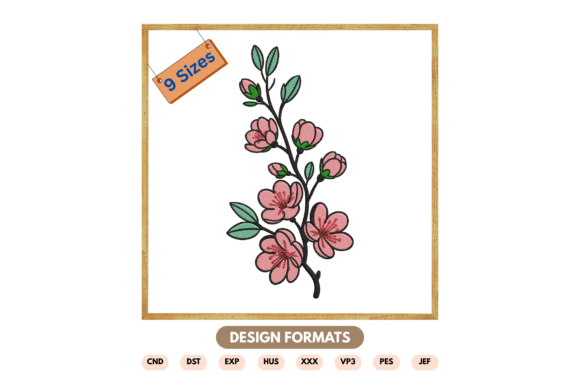
The first thing that strikes you about the Floral Branch Machine Embroidery is its understated elegance. Featuring soft pink flowers, gentle buds, and fresh green leaves on a graceful branch, this design avoids the clutter often found in floral motifs. For a professional embroidery designer, this simplicity is a major advantage. It suggests a premium, handmade aesthetic rather than a mass-produced feel. The visual personality is friendly yet sophisticated, making it suitable for a wide range of industries, from boutique florists to high-end bakeries.
When reviewing the embroidery file, I look for balance. Does the weight of the leaves counterbalance the blossoms? In this case, the composition feels organic and fluid. This natural flow is crucial when applying the design to curved surfaces like caps or flexible materials like tote bags. A rigid design can look awkward on these items, but the graceful arc of this branch adapts well to various contours, ensuring the finished product looks intentional and polished.
Real-World Applications for Small Business Merch
For small business owners, Etsy sellers, and merch creators, versatility is key. You need assets that work across multiple product lines to maintain visual consistency. Here is how I envision the Floral Branch Machine Embroidery performing in real-world scenarios:
- Branded Patches: This design is ideal for an embroidered patch. The distinct outline of the branch allows for clean cutting, whether you are creating iron-on backing for jackets or sew-on labels for packaging. A patch featuring this floral branch can serve as a subtle brand marker on denim jackets, canvas bags, or even laptop sleeves.
- Staff Uniforms and Aprons: For cafes, florists, or creative studios, staff apparel is a walking billboard. Placing this design on the chest pocket of a work shirt or the corner of an apron adds a touch of warmth. The apron embroidery application is particularly strong here; the green leaves and pink blossoms pop against neutral linen or cotton canvas, reinforcing a brand identity centered on nature, care, and craftsmanship.
- Cap Embroidery: Cap fronts offer limited space, making detailed designs risky. However, because this branch design is linear and graceful, it works beautifully along the curve of a cap brim or as a side-panel accent. It avoids the bulk that heavy, dense floral clusters might create, ensuring the hat remains comfortable and structured.
- Tote Bag Design: Canvas totes are a staple for handmade brands. Using this design as a central motif or a corner accent elevates a simple bag into a desirable accessory. The tote bag design potential is high because the open spaces in the branch allow the fabric texture to show through, preventing the item from feeling stiff or overly processed.
Technical Considerations and Stitch Density
While the aesthetic appeal is strong, technical execution determines the longevity of your merchandise. As a designer, I always advise checking the stitch density before running a full production batch. Floral designs can sometimes suffer from high density, which leads to puckering on lightweight fabrics. Since the description highlights "delicate" and "soft" elements, I suspect the digitizing aims for a lighter touch, but verification is essential.
When working with textured fabric, such as terry cloth towels or rough canvas, the fine details of the pink blossoms might get lost if the stitch count is too low or the thread contrast is poor. Conversely, on smooth performance fabrics, high density can cause registration issues. I recommend testing the Floral Branch Machine Embroidery on the exact material you plan to use for your custom apparel. Pay close attention to the transition between the green leaves and pink flowers. Are there jump stitches that need trimming? Is the underlay sufficient to prevent the fabric from showing through?
Another critical factor is the hoop size. Ensure that the design fits comfortably within your standard hoop without requiring excessive re-hooping, which can lead to misalignment. For smaller items like pocket logos, confirm that the design scales down without losing definition. Tiny lettering or intricate bud details can merge into a blob if reduced too much, so always create a printable mockup at actual size to check legibility and clarity.
Brand Identity and Customer Trust
Your choice of design assets directly impacts your brand identity. Using a cohesive visual language across your products builds recognition and trust. The Floral Branch Machine Embroidery conveys a sense of care and attention to detail. When a customer receives a package with a beautifully embroidered patch or a tote bag with this delicate branch, it signals that the brand values quality. This perception increases the perceived value of your handmade product and encourages repeat business.
For commercial embroidery projects, consistency is vital. If you use this floral motif on your packaging, ensure it complements your other branding elements. The soft pink and green thread colors should align with your overall color palette. If your brand is bold and modern, this design might serve as a contrasting soft element. If your brand is rustic and organic, it fits seamlessly. Either way, it enhances the narrative of your business, making your merchandise more than just items—they become stories.
Practical Designer Notes for Production
Before you commit to a large run of small business merch, follow these practical steps to ensure success with the Floral Branch Machine Embroidery:
- Test in Black and White: Convert the design to grayscale in your software to check for contrast issues. If the leaves and flowers blend together without color, you may need to adjust the stitch angles or density.
- Check Stabilizer Compatibility: Use the appropriate stabilizer for your fabric. Cut-away stabilizer is often best for garments that will be washed frequently, while tear-away might suffice for decorative patches that won't undergo heavy wear.
- Verify Commercial Licensing: Always confirm the license terms of the digital embroidery file. Ensure you have the right to use it for commercial purposes, especially if you are selling the finished items or using them for branded uniforms.
- Create Client Mockups: If you are designing for a client, present a realistic mockup. Show them how the branch looks on a dark uniform versus a light one. This helps manage expectations regarding thread color visibility.
- Inspect Spacing: Look closely at the spacing between the buds and leaves. Tight spacing can cause thread breaks or nesting. Ensure there is enough room for the needle to penetrate cleanly without hitting previous stitches.
In conclusion, the Floral Branch Machine Embroidery is a promising addition to any designer’s library. Its delicate nature and versatile composition make it suitable for a wide array of applications, from patches to apparel. By paying attention to technical details like stitch density, stabilizer choice, and fabric texture, you can leverage this design to create high-quality, professional merchandise that enhances your brand identity. Remember, the beauty of embroidery lies in the details, and this floral branch offers plenty of opportunities to showcase your craftsmanship.